
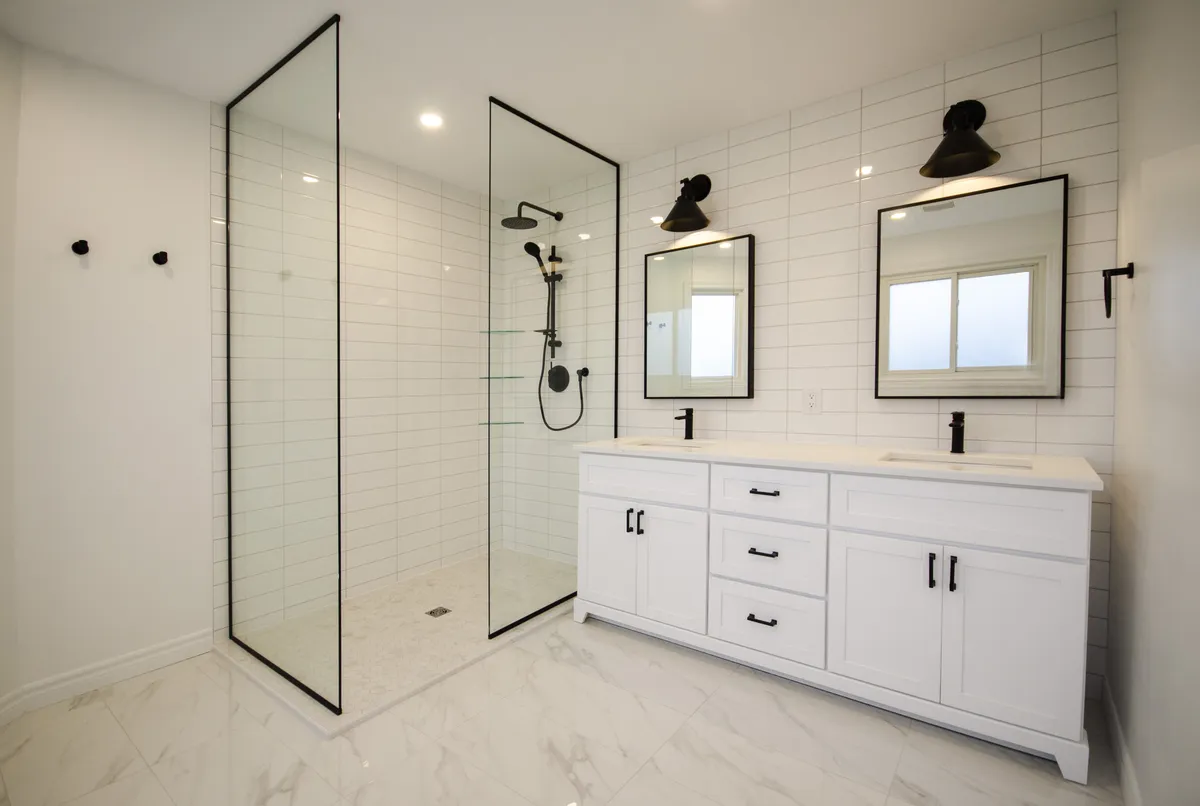
If you're thinking about pulling out the old soaker tub and putting in a proper walk-in shower, you're not alone — it's one of the most-asked bathroom renovation projects in Durham Region right now. Most homeowners do it because they never use the tub, or because they're planning ahead for aging in place. The honest answer on cost? Somewhere between $3,500 and $15,000, depending on what's behind the wall and what you choose to put in front of it.
That's a wide range, and it matters where you land. A straight prefab swap is a very different project from a curbless custom-tile shower with frameless glass. Here's a realistic look at what actually drives the number in Durham — and what you get back at the other end.
What Does a Tub-to-Shower Conversion Actually Cost?
Costs split fairly neatly into three tiers, mostly driven by the shower base you choose and whether you tile the walls. Here's how that breaks down in Durham Region in 2026.
| Project Level | Budget Range | What You Get |
|---|---|---|
| Basic prefab swap | $3,500–$6,500 | Acrylic or fibreglass shower base and surround, standard fixtures, sliding door, plumbing stays put. |
| Mid-range tile shower | $6,500–$12,000 | Tiled walls over a proper waterproofing membrane, low-profile base, semi-frameless glass, upgraded valve and head. |
| High-end custom | $12,000–$15,000 | Curbless entry, large-format tile, custom niches and bench, frameless glass, rain head plus handheld. |
Ranges assume a like-for-like footprint in a standard Durham bathroom; structural changes or moving the drain push numbers higher.
The sweet spot for most homeowners sits in the mid-range tier — around $8,000 to $11,000. That's where you get a tiled, properly waterproofed shower that looks custom, lasts twenty-plus years, and doesn't read as a builder-grade rental upgrade in your listing photos.
Where Your Budget Goes
Knowing the split helps you decide where to spend and where to save. A typical mid-range tub-to-shower conversion in Durham breaks down like this.
- Labour: 35–45% of your total budget. Demolition, framing, tile-setting, glass install, and final plumbing all get billed here. Tile labour is the single biggest variable — large-format and mosaic both cost more to set than a standard 12x24.
- Plumbing: 15–20%. A like-for-like swap is inexpensive. Moving the drain, relocating the valve, or upgrading the drain size for a curbless shower can each add $1,500 or more to the job.
- Waterproofing and base: 20–25%. This is the part you'll never see and absolutely cannot cut. A proper waterproofing membrane under the tile is what keeps the shower from leaking into the joists in five years.
- Glass enclosure: 10–15%. A sliding door on a prefab is a few hundred dollars. A semi-frameless panel is $1,200–$2,000. A fully frameless walk-in runs $2,500 and up.
- Fixtures and finishes: 10–15%. Valve, showerhead, handheld, niche trim, drain cover — an easy place to over- or under-spend depending on the brand you choose.
- Contingency: 10–15%. Always build this in — especially in older Durham homes, where you don't know what's behind the tile until demo day.
What Makes a Tub-to-Shower Conversion Cost More
A few specific choices push the price up — some worth it, some not, depending on how long you plan to stay.
- Moving the drain or valve. The tub drain sits in one spot; a centred shower often needs the drain moved. If you have a basement underneath, this is straightforward. On a slab or upper floor, expect around a $500 add.
- Going curbless. A barrier-free entry is the gold standard for accessibility and looks, but it requires recessing the subfloor or building a sloped pan. Plan on $2,000–$4,000 extra for the structural work alone.
- Custom tile work. Mosaic floors, herringbone patterns, full-height feature walls, and large-format slabs all add labour hours. A custom niche alone is usually $300–$600 installed.
- Frameless glass and rain heads. Beautiful, but the upgrade from a basic enclosure to a 10mm frameless panel with a thermostatic rain-and-handheld setup can add $2,500 on its own.
What Keeps Costs Down (Without Sacrificing Quality)
Good news here — there are real ways to control the budget that don't show up in the finished result.
- Keep the footprint. If the new shower lands where the tub was and the drain stays put, you save thousands in plumbing and framing right away.
- Use a quality prefab base under tile walls. A solid-surface or acrylic base under tiled walls gives you the look of a custom shower at a real saving versus a fully tiled pan.
- Use smaller tiles. Smaller wall tiles like 4" x 12" and mosaic sheets on the floor cut material waste and labour at the same time.
- Spend on the things you touch. A great valve, a heavy glass door, a solid drain cover — those last decades. Save on the niche trim or the accent stripe instead.
What You Get Back at Resale
A tub-to-shower conversion is one of the few renovations that returns value on two fronts — resale dollars and aging-in-place liveability. Here's how it tends to shake out for Durham homes.
| Tier | Typical ROI | Why |
|---|---|---|
| Basic prefab swap | 60–70% | Reads as a builder upgrade; functional, not aspirational. |
| Mid-range tile shower | 75–85% | Looks custom in listing photos; signals "no work to do." |
| Curbless / aging-in-place | 70–90% | Strong with the 55+ buyer pool that's growing fast across Durham. |
If you're staying long-term, the bigger return is in years of comfortable, safe daily use. If you're selling within five years, the mid-range tile shower almost always wins on dollar-for-dollar return.
How to Think About Your Conversion Budget
Before you settle on a number, sit with these questions for a few days.
- Are you staying or selling? If you're in this house for ten more years, spend on comfort and accessibility. If you're listing in two, the mid-range tile shower is usually the right call.
- Who's using this bathroom? A primary ensuite used by two adults every day deserves more investment than a guest bath that sees a shower a week.
- What's your plumbing situation? If the drain is in the right spot and you can reuse the valve location, your budget stretches a lot further. If everything has to move, plan accordingly.
- Are you planning for aging in place? A curbless entry, a built-in bench, and proper blocking for grab bars added now is far cheaper than retrofitting later.
Ready to See What Your Shower Could Be?
If you're weighing a tub-to-shower conversion and want a real number for your space, we offer a free in-home consultation. We'll take a closer look at your bathroom, your plumbing, and what your budget can actually buy. If you'd rather start with the bigger picture, our full bathroom renovation cost guide for Durham Region is a good place to begin.
Floor and Bath Design — serving Durham Region since 1989, Best of Houzz winner. Showroom at 109 Old Kingston Road, Ajax. Call 905-683-0079 or stop by.
Frequently Asked Questions
How long does a tub-to-shower conversion take?
Most projects run 5–10 working days from demo to glass install. A basic prefab swap can be done in 3–4 days; a custom curbless tile build with a drain relocation usually runs closer to two weeks.
Will removing the tub hurt my home's resale value?
Only if it leaves your house with zero tubs. Most Durham buyers want at least one bathtub somewhere in the home — usually for kids or resale optics. If you have a second bathroom with a tub, converting your primary ensuite to a shower is almost always a value-add.
Can I do a tub-to-shower conversion without moving the plumbing?
Often, yes. If your tub drain and valve are in workable spots, a like-for-like conversion keeps the plumbing largely as-is. A good installer will tell you in the first walk-through whether your layout cooperates.
Is a prefab shower base really worse than a tiled one?
Not worse — just different. A quality acrylic or solid-surface base is faster to install, fully waterproof on day one, and warrantied. A tiled pan looks more custom and lasts longer, but it costs more and depends entirely on the waterproofing underneath.
What's a curbless shower and is it worth the extra money?
Curbless means no step at the entry — the floor flows straight in. It's better-looking, easier to clean, and essential for true accessibility. If you can do it within your existing floor structure, it's usually worth it. If it requires major framing changes, weigh the cost carefully.
Do I need a permit for a tub-to-shower conversion in Durham?
If you're moving plumbing or doing structural work, yes. A straight like-for-like swap with no relocation often does not need a permit, but your contractor should confirm with your municipality before starting demo.
What waterproofing should be used behind the tile?
A proper sheet or liquid membrane — Schluter Kerdi, Wedi, or a topical product like RedGard applied to spec. Green drywall alone is not waterproofing. This is the single most important hidden detail in the entire project.
How do I plan for aging in place without making it look medical?
Three quiet moves: a curbless entry, blocking inside the wall for future grab bars, and a built-in bench wide enough to actually sit on. Done well, none of it reads as a hospital bathroom — it just reads as a beautiful, comfortable shower.
