
Your kitchen layout affects everything — how efficiently you cook, how traffic flows through the space, and how much storage you get. Choosing the wrong layout is expensive to fix later.
Here's what each layout does well, where it falls short, and which Durham Region home sizes suit each one.
U-Shape Kitchen
Three walls of cabinetry and counter space, forming a U around the cook.
Works best for: Medium to large kitchens (10×10 feet minimum). Homes where the kitchen is a dedicated room rather than open-concept.
Strengths:
- Maximum storage and counter space
- Everything within reach — the cook stays in the centre
- Clear separation between kitchen and living areas
Watch out for:
- Not great for multiple cooks — the U shape creates a single-person workspace
- Below 8×8 feet, the centre gets cramped
- Can feel closed-off in smaller homes
Tip: If your U-shape kitchen feels tight, consider removing the upper cabinets on one wall and replacing with open shelving — it opens the sightlines without losing the layout's efficiency.
L-Shape Kitchen
Two walls of cabinetry meeting at a corner, leaving the rest of the room open.
Works best for: Open-concept homes. Kitchens that share space with a dining or living area. Most Durham Region homes built after 2000.
Strengths:
- Opens the room up — natural fit for open-concept living
- Flexible enough for a dining table or island addition
- Good work triangle (stove, sink, fridge) when stations are spaced properly
Watch out for:
- Corner cabinets can waste space without proper solutions (lazy Susans, blind corner pull-outs)
- Needs sufficient room between stations on the same wall — too tight and prep gets awkward
- Counter space is limited to two walls
Tip: Place your primary prep area near the corner bend of the L — that's where you get the most counter depth and natural light from both directions.
Island Kitchen
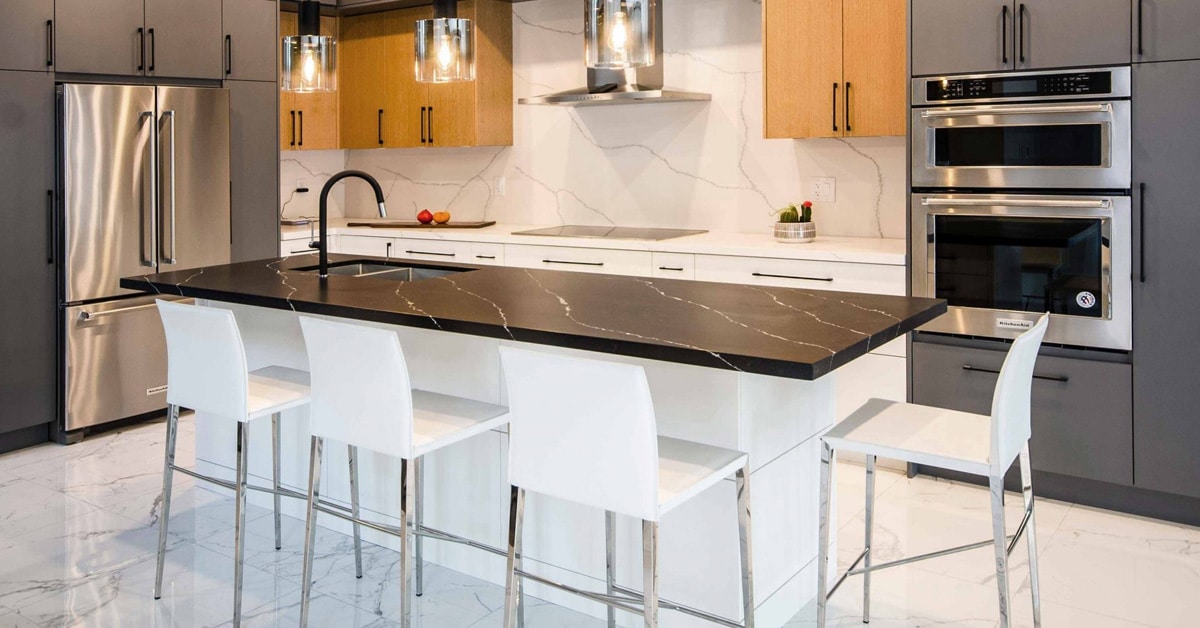
An L-shape or U-shape with a freestanding workstation in the centre. The most requested layout in kitchen renovations right now.
Works best for: Large kitchens (12+ feet across) with enough room for 36–42 inches of clearance on all sides of the island.
Strengths:
- Extra counter space and storage
- Natural gathering spot — stools on one side, prep on the other
- Can house the cooktop, sink, or both
- Works as a room divider in open-concept spaces
Watch out for:
- Needs a minimum 26-square-foot kitchen for efficiency — don't force an island into a small space
- Plumbing and electrical add cost if you put the sink or cooktop in the island
- Traffic flow around the island matters — plan for how people move through
Tip: A rolling or moveable island works for kitchens that aren't quite big enough for a permanent one. You get the prep surface when cooking and can push it aside for gatherings.
Peninsula Variation
A peninsula is an island that connects to a wall or cabinet run on one end. Same benefits as an island but needs less floor space. Good for kitchens where a full island won't leave enough clearance.
Galley Kitchen
Two parallel walls of cabinetry with a corridor in between. Common in older homes and condos.
Works best for: Narrow spaces. Efficient cooking for one person. Homes in older Oshawa and Pickering neighbourhoods.
Strengths:
- The most space-efficient layout — minimal wasted movement
- Every surface is within arm's reach
- Maximum cabinetry for the available floor space
Watch out for:
- Can feel cramped if the corridor is under 4 feet wide
- Not great for entertaining — limited room for more than one person
- Doorways at both ends can create through-traffic during cooking
Tip: If your galley kitchen has a dead-end wall, consider closing the far end with a window or small counter instead of a door. It eliminates traffic and adds usable counter space.
Single-Wall Kitchen
All cabinets, appliances, and counter space along one wall.
Works best for: Small homes, condos, studio apartments, cottages, and basement kitchens. Common in vacation properties across Durham Region.
Strengths:
- Uses the least floor space of any layout
- Simple and affordable to install
- Leaves maximum open room area
Watch out for:
- Limited counter and storage space
- Efficiency drops as the wall gets longer — too much side-to-side movement
- Works for light cooking but can frustrate serious cooks
Tip: Place the sink in the centre with counter space on both sides and the fridge at one end, stove at the other. This gives you the best flow within the single-wall constraint.
Choosing the Right Layout for Your Home
The layout decision comes before cabinet selection, finish choices, or budget planning. Get this right and everything else falls into place. Get it wrong and you'll live with the frustration daily.
Quick decision guide:
- Under 80 sq ft: Single-wall or galley
- 80–120 sq ft: L-shape or U-shape
- 120+ sq ft: L-shape with island or U-shape with island
- Open-concept: L-shape (with or without island)
- One cook, efficiency focus: Galley or U-shape
- Multiple cooks, social kitchen: L-shape with island
At Floor and Bath Design, we measure your space, talk through how you actually use your kitchen, and recommend the layout that fits — before any cabinet decisions get made. It's the first step in our renovation process.
Book a free consultation and bring your kitchen measurements. We'll show you what layout options work for your space.
Floor and Bath Design · 109 Old Kingston Road, Unit 4, Ajax ON · 905-683-0079
Frequently Asked Questions
What is the most popular kitchen layout in Durham Region?
The L-shape with island is the most requested layout in our showroom. It works well with the open-concept floor plans common in newer Durham Region homes and gives the most flexibility for both cooking and socializing.
What is the most efficient kitchen layout for cooking?
The galley (parallel wall) layout minimizes movement between stations and keeps everything within reach. For a single cook who prioritizes efficiency over socializing, it's the most productive layout.
Can I add an island to my existing kitchen?
If you have at least 36–42 inches of clearance on all sides, yes. For kitchens that are tight on space, a peninsula (connected to one wall) gives you a similar prep surface and seating area with a smaller footprint.
What's the minimum kitchen size for an island?
About 12 feet wide by 12 feet long (144 sq ft). Below that, a full island with adequate clearance becomes difficult. A narrow rolling island or peninsula is a better option for smaller kitchens.
How do I know which kitchen layout is right for my home?
Measure your kitchen, count how many people typically cook at the same time, and note where doors and windows are. Bring those details to a free consultation at FBD — we'll map the options that fit your space and how you use it.
Does changing my kitchen layout count as renovation or remodeling?
Changing the layout is remodeling — it typically involves moving plumbing, electrical, and possibly walls. Keeping the same layout but updating cabinets, countertops, and finishes is renovation. See our full breakdown of renovation vs. remodeling.
